
The player dodges enemies while choosing their colour and aligning with different coloured enemies to mix new colours, both for each level's objective and to take out enemies behind. Playable here: Itch.io
Project Breakdown
Top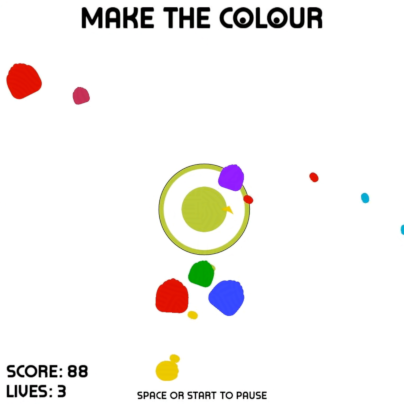
Each level can be completed immediately given the right combination of enemies, but the player is challenged to wait. They build their score while dodging incoming enemies and farming the enemies behind them to make sure they have the ones they need while not getting overrun.
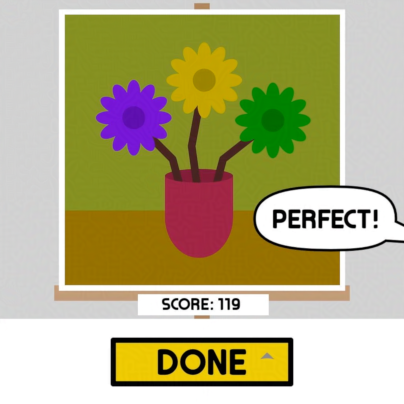
The player is challenged to reach as high a score as possible while avoiding running out of time or losing lives in each level. After completing each level, the paint they’ve mixed will be used to paint a picture. The farther they get through the levels, the more of the picture will be completed, featuring a unique combination of colours on each run.
Design Iteration
TopCOLOUR COLLIDER started out as a standard twin-stick shooter I made while learning Godot in 2024.
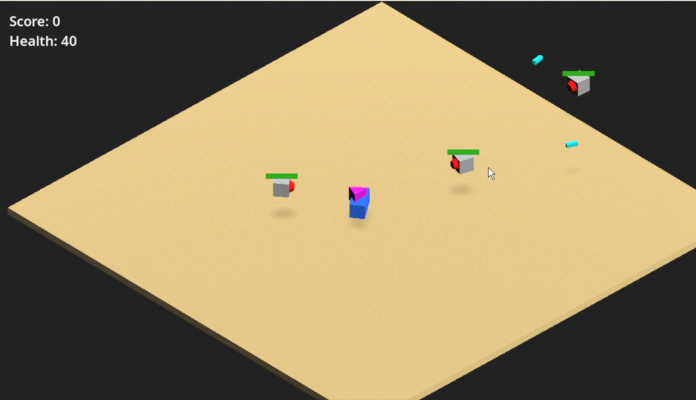
Although I was very happy with the smooth movement I'd developed, I didn't know what to do with the enemies at the time, so I shelved the project. After I completed my Master's degree in the Autumn of 2026, I was considering what game to develop next and discovered the NFTS Game Poems Jam and its theme of The Other One. I found the jam too late to enter as it was only a day long, but the theme gave me the core focus for Colour Collider: Enemies you either wouldn’t be able to kill, or wouldn’t want to.I felt this elevated my twin-stick shooter concept from battling endless hordes to a loop of effectively farming enemies to make sure you could take out new enemies as needed, while dodging the ones you couldn’t deal with. From there, I quickly fell on the idea of colour coding the enemies, with primary colours being needed to take out more complex colours.
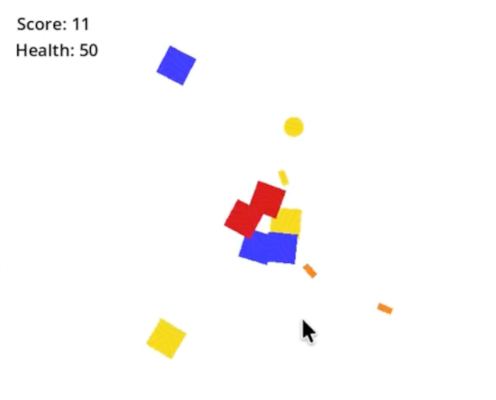
This first demo was built directly from the original twin-stick shooter project which was developed in 3D. I kept the movement and basic game logic, but otherwise remade the entire project into 2D to better support the top-down perspective and iconic artstyle of the game.
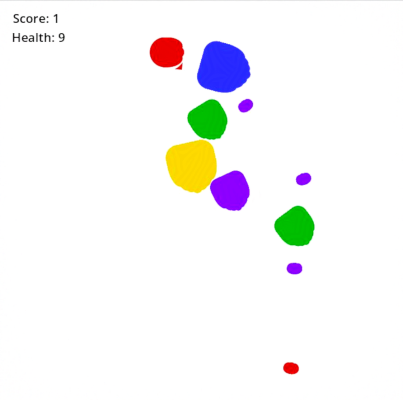
In developing the game loop, I originally envisioned the player having to mix each colour consecutively to get to increasingly difficult levels as the target pool they would mix in got smaller and smaller. A key issue with this first approach was losing both the player and enemies that were the same colour as the colour to mix.
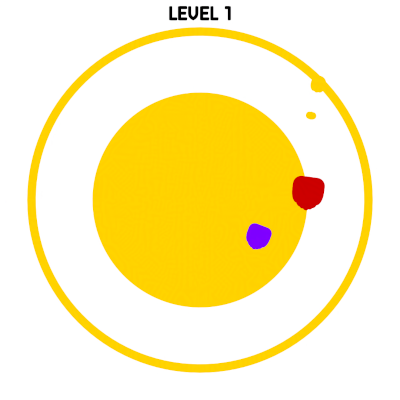
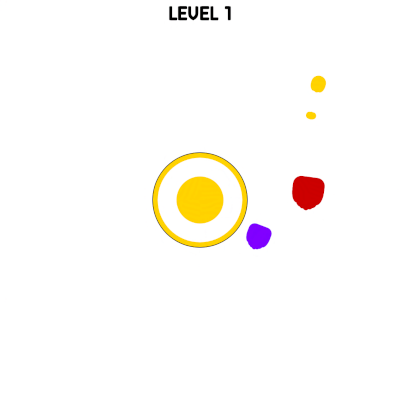
I considered potential solutions to this, such as adding outlines to the characters, which would have detracted from their appearance as paint on a mixing tray, or a simple non-diegetic bar. I ended up reducing the size of the goal to the middle of the screen, blocking the player from entering it and decreasing it’s size within the level as a timer, of sorts, that also increases the pressure of aiming while making the right colour within each level.
From there, I redeveloped the game around a random set of 7 levels to make the level progression more manageable, while also varying the player’s objectives on each run. These included one perfunctory primary level to introduce the concept, two secondary levels and three tertiary levels that build in difficulty towards a final brown level.
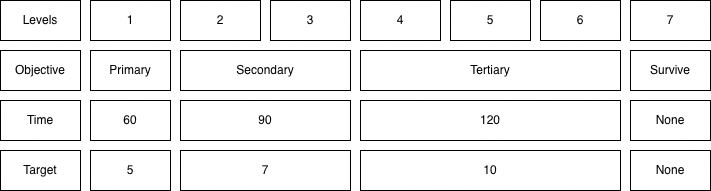
Originally, I had the player making brown when they mixed any colour with a tertiary enemy or a tertiary colour with any enemy. Envisioned as the most complex colour this was positioned as the final level. However, there was an inherent problem with mixing brown. This colour doesn’t mix with anything else or have an associated enemy, so brown bullets were effectively nullified until the final stage, where they would fill the objective.
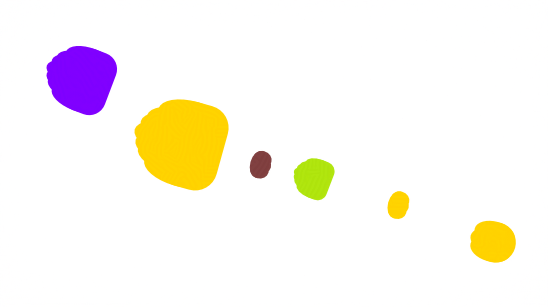
Including this made the game significantly harder as the player could no longer expect their bullet to take out a given enemy. Any enemy that got in the way had a chance of mixing one time too many and nullifying the shot. Additionally, tertiary enemies are the smallest and hardest to deal with meaning that the player can get snookered by close tertiary enemies that means none of their shots will count.
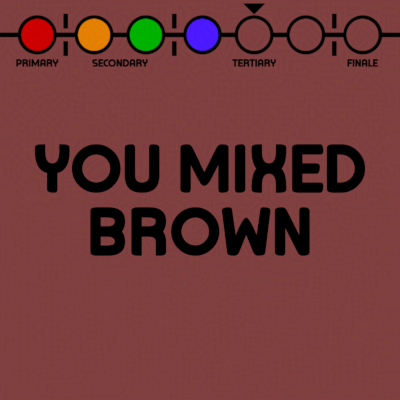
Ultimately, I decided to remove brown as a colour but keep the concept. Instead, I've made it the fail state when the player runs out of lives, which represents them mixing with all the enemies they’ve hit. I also changed the final level into a push for survival with the player’s remaining lives. As a finale, they are free to focus on collecting points until they eventually lose and meet the objective of the last level by mixing brown.
Accessible Design
TopColour Blind Mode
A key focus of Colour Collider is mixing specific colours. This gameplay becomes significantly harder if a player is colour blind, as the gameplay relies on the player’s ability to tell all the colours apart. This barrier for players with colour blindness represents an unintended experience and an unfair increase in difficulty for hundreds of thousands of people around the world.To address this barrier, I introduced a mode that reinforces the colours of each character and objective with shape language. The mode enables players to tell colours apart and identify the ones they need to make by the shape produced, rather than the shade of each colour.
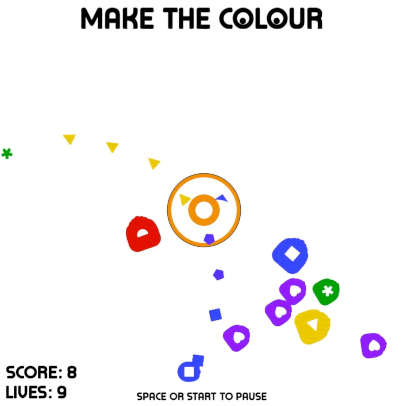
The shapes used were chosen at random to avoid trivialising the identification and learning of which colours are needed to mix any given colour. This educational outcome is an intended experience for players regardless of how they approach the game.