
Virtual Guitar Game hands players a virtual guitar and teaches them how to play it through an exploratory learning process as they set up for their own performance. A playable build of the game is available upon request.
Project Breakdown
TopFor the Final Major Project of my UX Design Master's degree with Falmouth University’s Games Academy I developed Virtual Guitar Game. The prototype innovates on the rhythm action genre by including a fully playable virtual guitar that enables players to perform any song they want at any time.
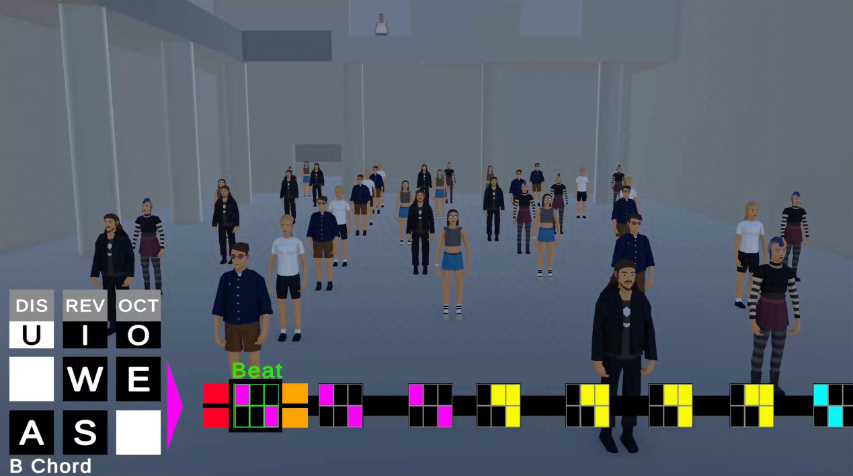
The musical improvisation this system allows breaks away from the gameplay of traditional rhythm action games, in which players are relegated to gamekeepers of prerecorded music, and pushes towards active performance.
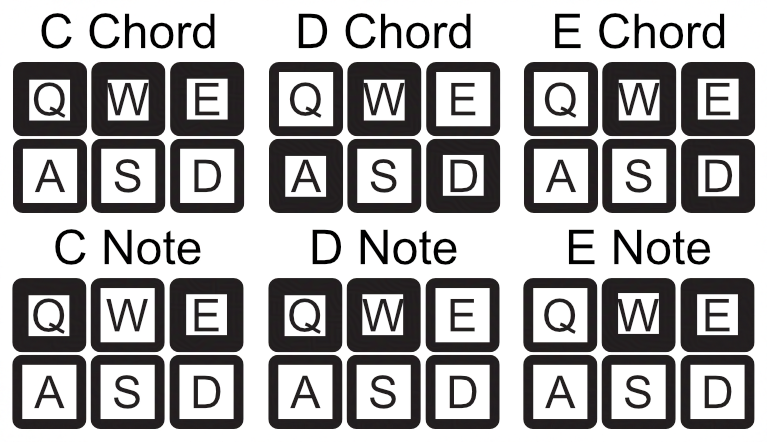
The virtual guitar is played by pressing specific combinations or patterns of buttons across a 2 by 3 grid. This interface allows all chords and notes to be played at any time, with the addition of pedals to apply effects to the sound.The virtual guitar is modelled on a physical guitar, so the songs players learn through the game are directly transcribed and performed live by the player after they learn them in the level. The player is guided by an exploratory learning system, inspired by the work of Mary Riley and the three phases of learning she describes: exploration, competency and achievement. I used these as the basis for my user journey:
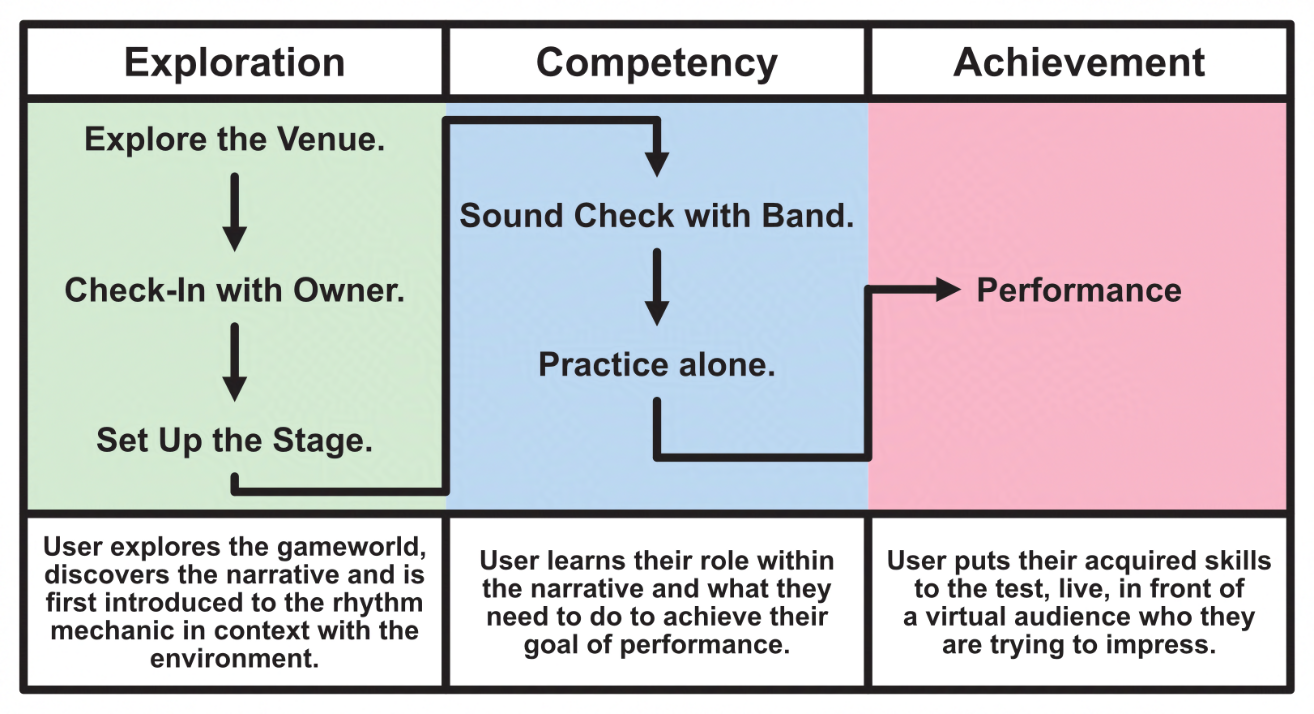
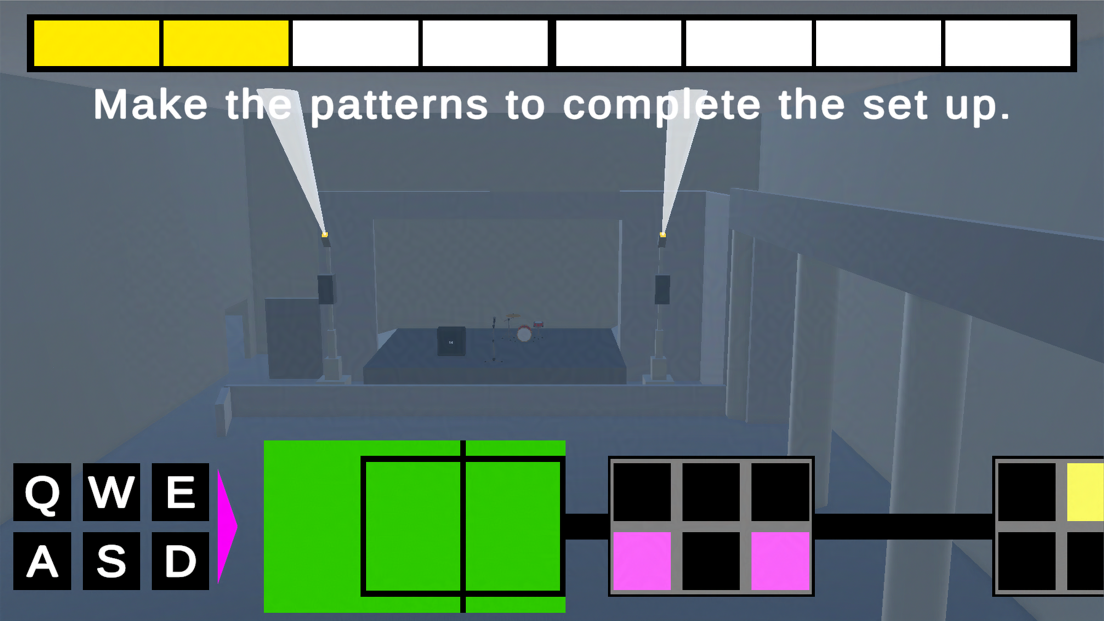
The player starts by exploring the venue to set up the stage, engaging with the same patterns they need for the virtual guitar but outside the context of playing music.
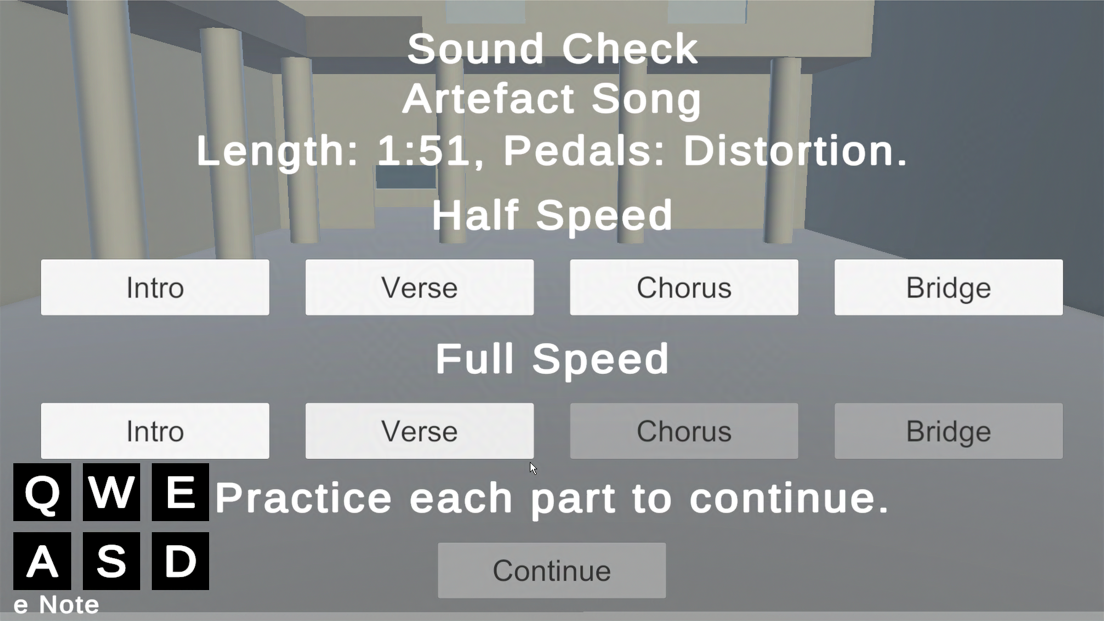
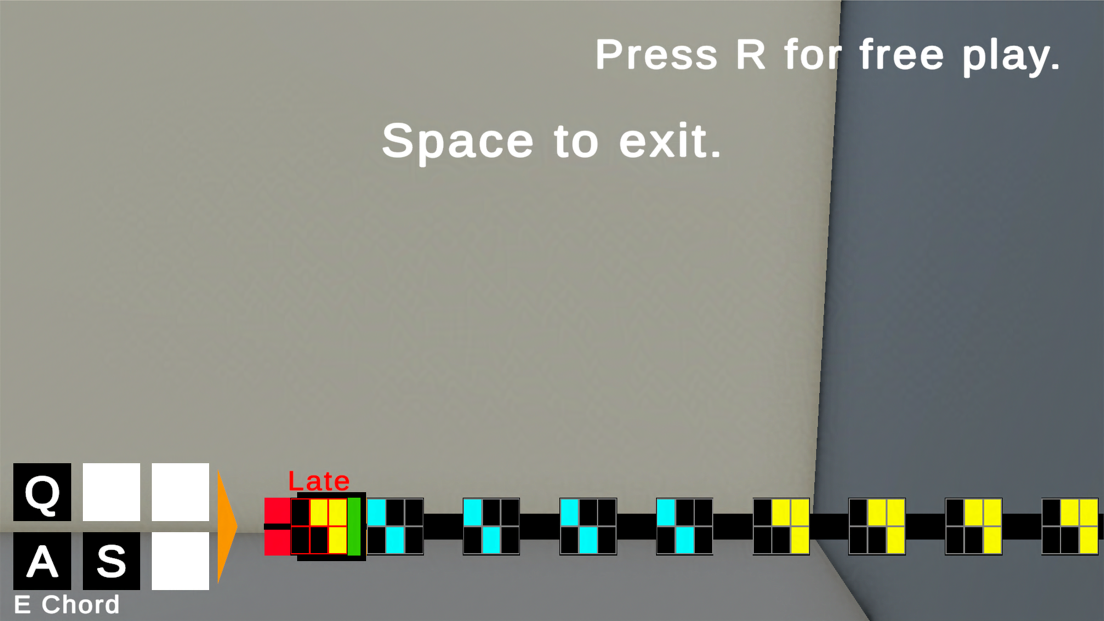
They are then introduced to the song in parts and slowly, via a sound check with direct in-fiction feedback from their band.
Next, they have a break to explore again and time to practice anything they’re unsure about in the green room.
Before finally heading to the stage to perform the song they’ve learned.
Design Iteration
TopConcept Research
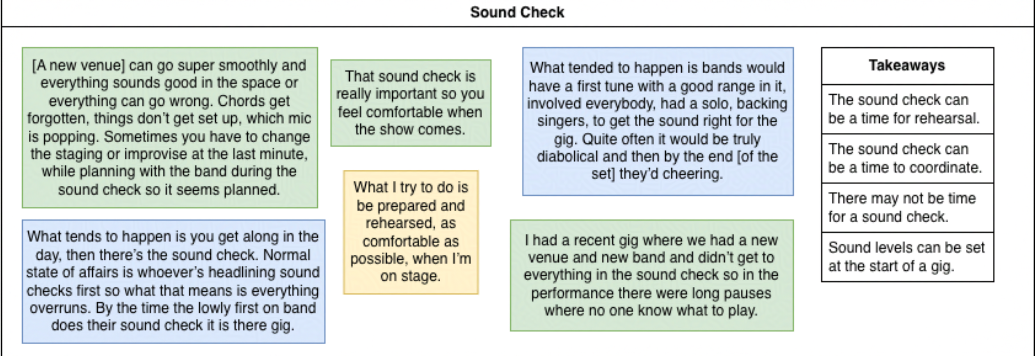
I started the project with a round of expert interviews with working musicians to gain an understanding of the lived experience I was simulating. This highlighted, among other things, the impact of the sound check as a free practice space for performance, which I would incorporate into my design.
Interface Design
From an initial concept with a single button for each string and chords presented as tunings, I ended up with a six-button system loosely inspired by the control scheme for Guitar Hero Live. This interface supports all chords and an octave of notes using original samples from live instrument recordings.
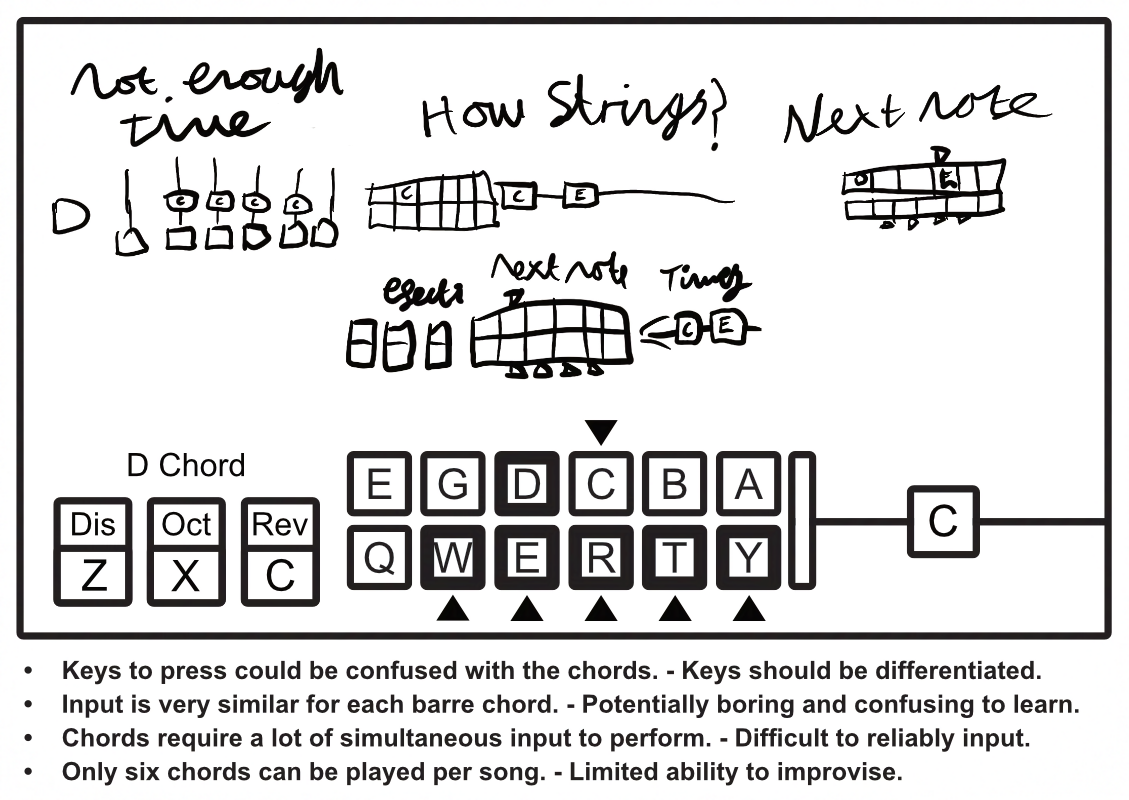
I developed the design, aided by expert testing with working musicians looking towards the playability of the interface for musical performance. This final approach considers chords and notes in a similar form to a real guitar, with multi-finger patterns employed to interact with the system.
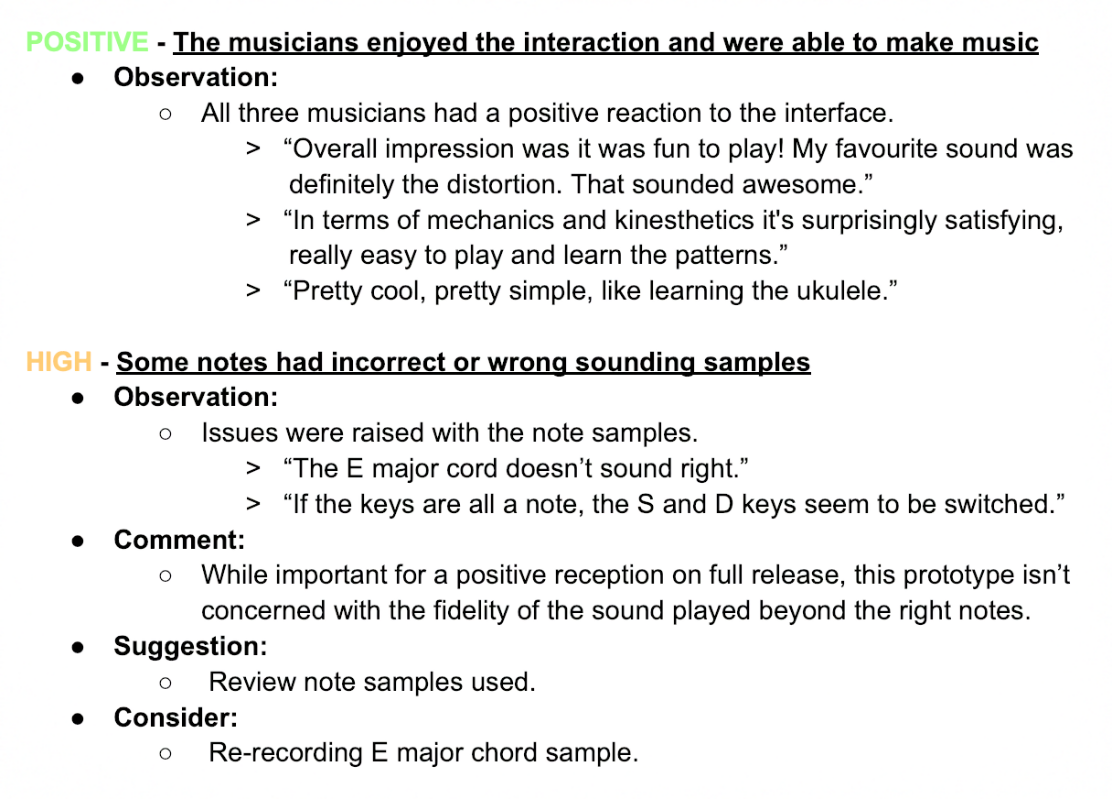
User Testing
I developed the project with two rounds of user testing. The first tasked five players with learning to play Seven Nation Army by The White Stripes on the virtual guitar. By performing a known song on an unknown interface, this prioritised the interface over the learning process. I then iterated on the build after each test by comparing individual findings to previous tests to be ready for the final testing phase.
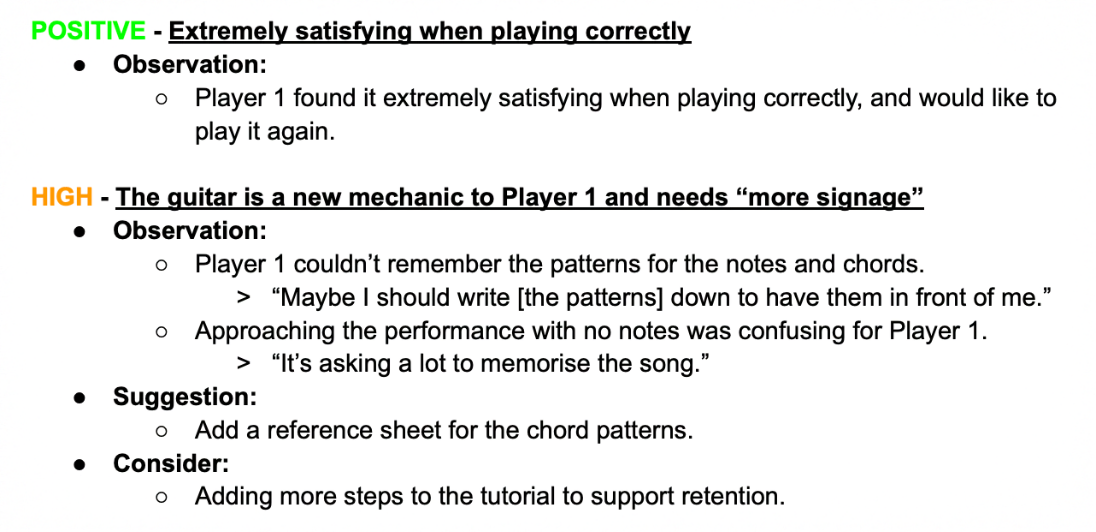
Following this first testing phase, I redesigned the original focus of the game from memorising notes, for a more realistic performance, to a more traditional sight-reading approach for learning the song. This method still supports the player in improvising with all chords and notes at any time.In the second round, the five returning players and five new players were presented with an original composition. Both groups then played through the prototype with the changes from Phase 1 while learning my original song to interrogate both the new and returning player experience.
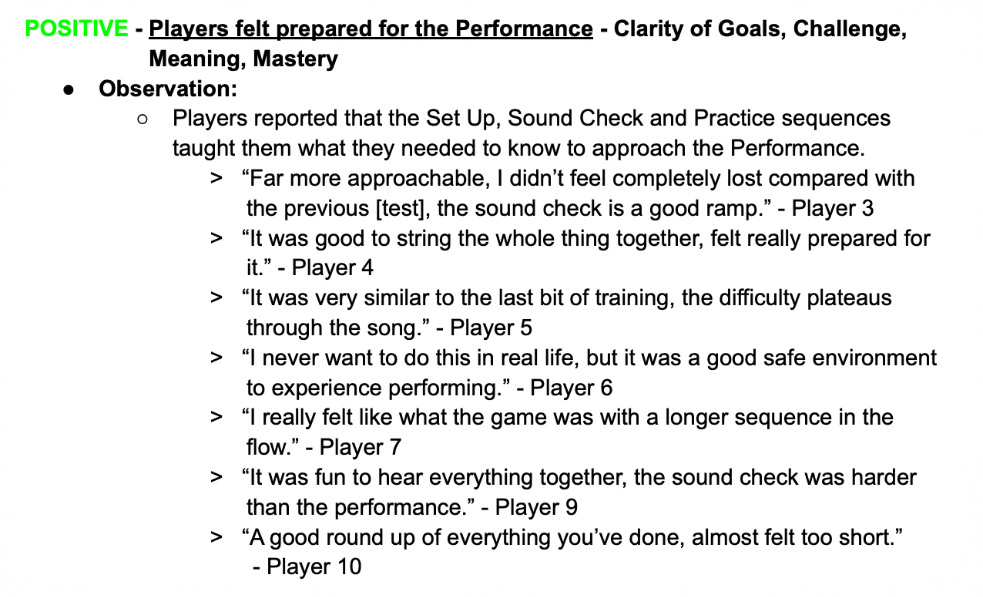
To compare the experiences of the new and returning player groups, I used the mini-Player Experience Inventory scale. This comparison highlighted key areas of positive feedback as well as areas to focus on and helped me prioritise my findings.
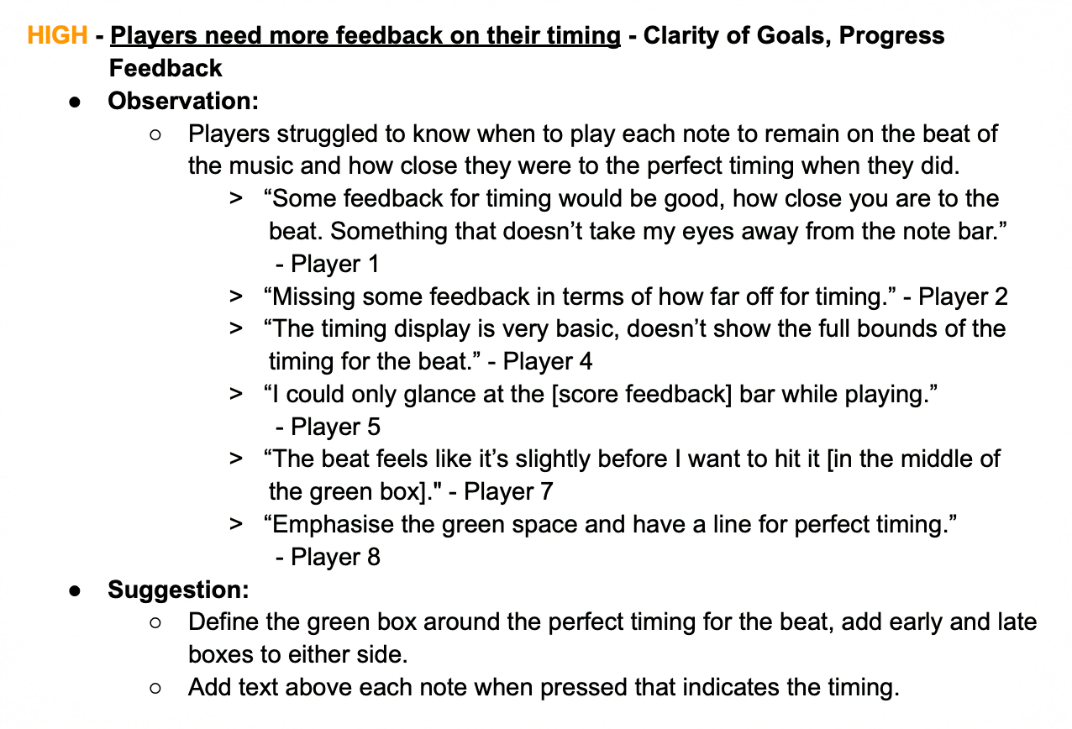
Following the final testing phase, I developed the sound check interface and improved the timing feedback, among other minor improvements to the core design.
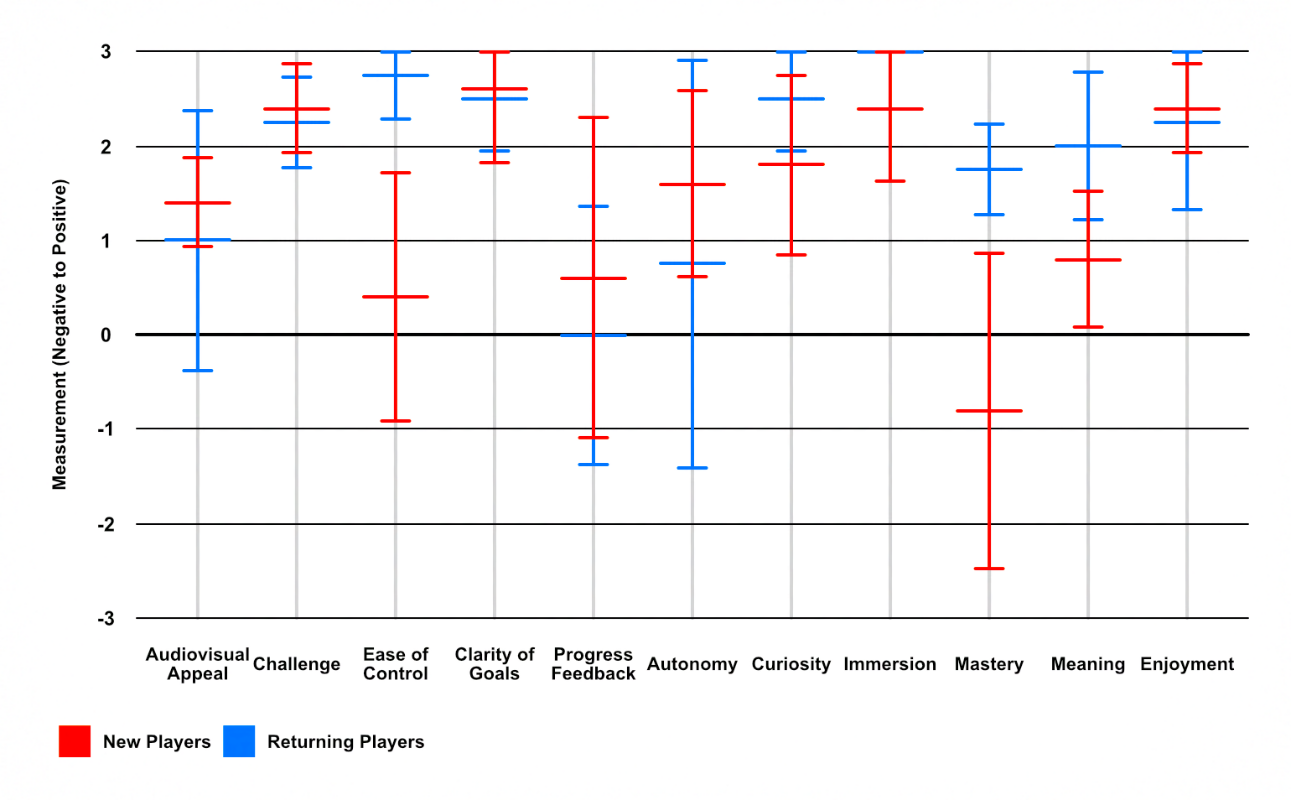
Ultimately, as attested by the working musicians consulted and shown by the successful performance of a new song by all 10 players in my second testing phase, the game successfully teaches players to play the virtual guitar in a manner approaching that of a working musician within only a single session.